Gold in 2024–2025: Structural Drivers
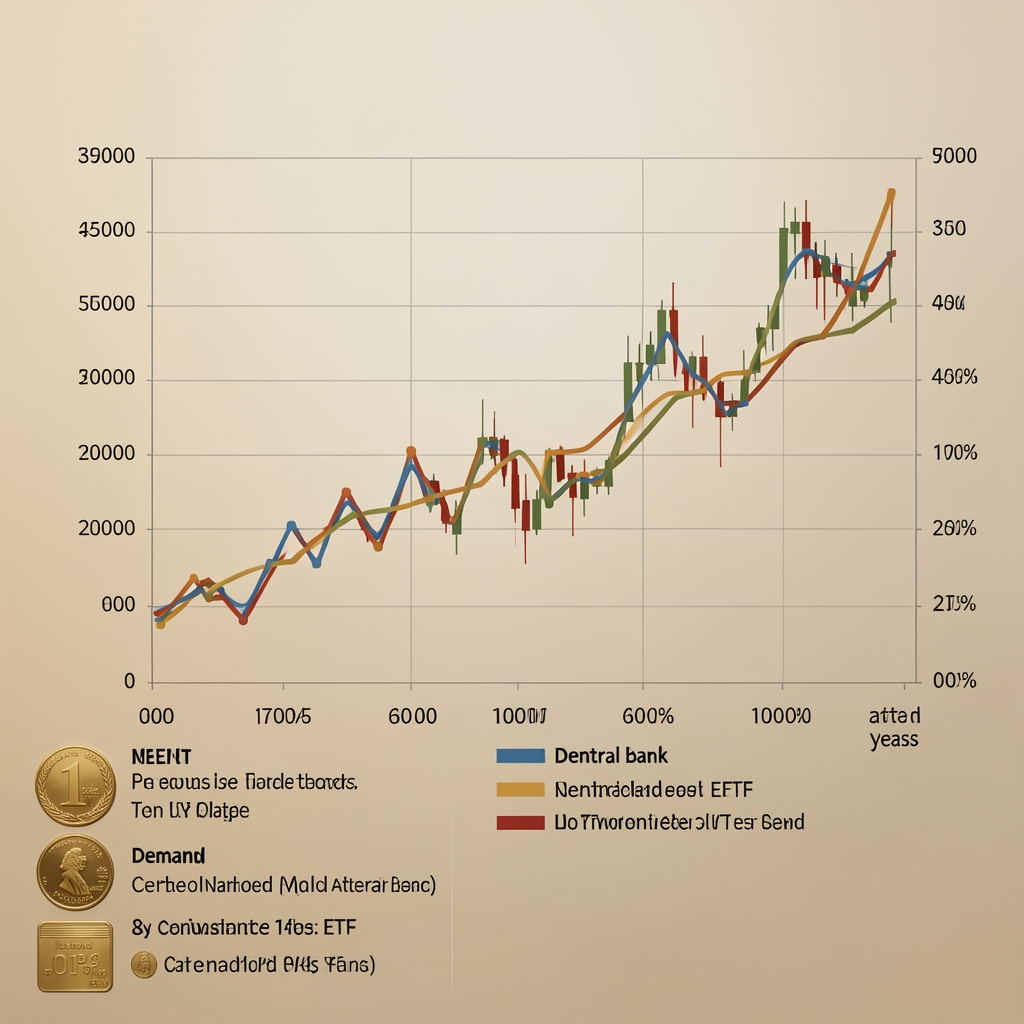
Gold's sustained elevation above USD 2,300/oz represents more than cyclical momentum — it reflects a structural repricing of safe-haven assets in an era of persistent geopolitical uncertainty, elevated sovereign debt levels and central bank diversification away from USD reserves. Our research identifies three compounding factors underpinning the current regime.
1. Central Bank Demand Regime Shift
The 2022 freezing of Russian sovereign reserves in Western financial infrastructure triggered a reassessment among central banks globally. Nations outside the G7 sphere have accelerated reserve diversification, substituting US Treasury holdings with physical gold. This is a multi-year, structural demand driver that is largely price-insensitive.
2. Real Interest Rate Sensitivity
Gold's traditional inverse relationship with real yields has weakened somewhat in the 2022–2024 period, as institutional investors have maintained or increased allocations despite positive real rates. This suggests non-interest-rate demand factors (geopolitical hedging, currency diversification) are now structurally more significant than in prior cycles.
3. Retail and ETF Positioning
Western-listed gold ETFs (SPDR Gold Shares, iShares Gold Trust) have seen outflows while Asian retail demand and over-the-counter (OTC) purchases have offset these. The geographic rebalancing of demand reflects changing global financial architecture.
Energy Transition and Commodity Supercycle Thesis
The global shift to net-zero carbon by 2050 is a significant long-term commodity demand driver — but not uniformly bullish. Analysts should model both transition winners (copper, lithium, cobalt, nickel) and structural losers (thermal coal, internal combustion engine-related metals).
- Copper — electrical wiring, EV motors, grid infrastructure
- Lithium — battery cathodes and electrolyte
- Nickel — high-energy-density batteries (NMC)
- Cobalt — cathode stabiliser in LFP alternatives
- Silver — photovoltaic cell contacts
- Aluminium — lightweight vehicle structures
- Thermal coal — regulatory phaseout in EU by 2030
- Crude oil (long-term) — peak demand scenarios post-2030
- Platinum — ICE catalytic converter demand declining
- Palladium — ICE concentration risk, EV substitution
- Natural gas — medium-term bridge fuel, uncertain timeline
Agricultural Commodities: Climate and Geopolitical Risk
The 2022 disruption of Black Sea grain exports (Ukraine-Russia conflict) demonstrated how rapidly geopolitical shocks can translate into global food price volatility. For Nordic portfolios with agri-commodity exposure, we assess both physical market fundamentals and relevant derivative instruments (Paris milling wheat futures, Chicago Board of Trade contracts).